



California Earthquake History, Risks, and How to Prepare
California is one of the most beautiful states in America, but it is also one of the most earthquake-prone
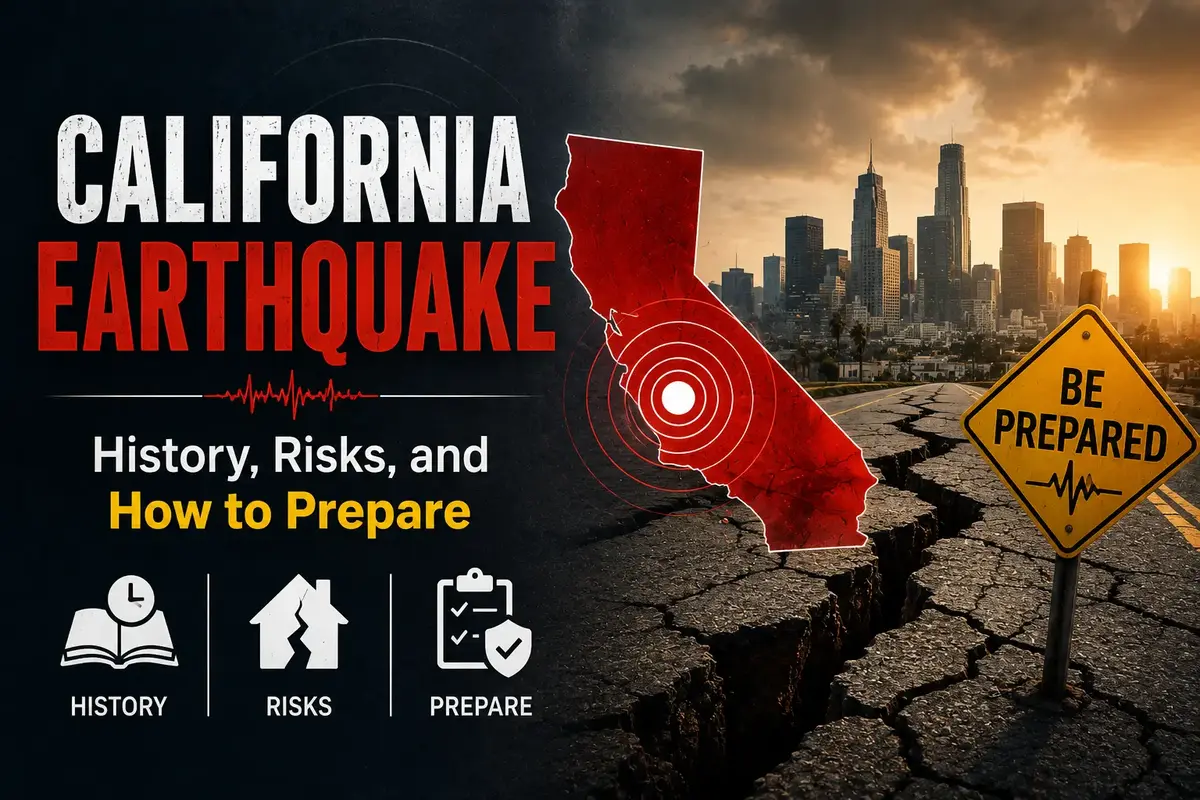
California is one of the most beautiful states in America, but it is also one of the most earthquake-prone regions on Earth. Every year, thousands of earthquakes shake the Golden State, most of them too small to feel. But history has shown us that California can and does experience devastating, life-changing earthquakes.
Whether you live in California, are planning to visit, or simply want to understand the risks, this guide covers everything you need to know. From the history of major earthquakes to practical tips on how to stay safe, we have you covered.
California Earthquake History
California has a long and well-documented history of powerful earthquakes. Here are some of the most significant:
The 1906 San Francisco Earthquake: This is arguably the most famous earthquake in American history. On April 18, 1906, a massive earthquake with an estimated magnitude of 7.9 struck San Francisco. The shaking lasted nearly a minute and was felt from Oregon to Los Angeles. The earthquake and the devastating fires that followed killed over 3,000 people and destroyed much of the city. It remains one of the deadliest natural disasters in U.S. history.
The 1971 Sylmar Earthquake: On February 9, 1971, a magnitude 6.6 earthquake struck the San Fernando Valley near Sylmar. The quake caused 65 deaths and significant damage to hospitals, freeways, and dams. It was a wake-up call that led to major improvements in building codes across California.
The 1989 Loma Prieta Earthquake: This magnitude 6.9 earthquake struck during the World Series, making it one of the most watched disasters in television history. It killed 63 people, injured nearly 4,000, and caused widespread damage across the San Francisco Bay Area, including the collapse of a section of the Bay Bridge.
The 1994 Northridge Earthquake: On January 17, 1994, a magnitude 6.7 earthquake struck the Northridge area of Los Angeles. It killed 57 people and caused an estimated $25 billion in damage, making it one of the costliest natural disasters in U.S. history at the time. Many freeways collapsed, and thousands of people were left homeless.
Recent Earthquakes: California continues to experience significant seismic activity. The Ridgecrest earthquakes of 2019, a magnitude 6.4 and then a 7.1 just one day apart, were the largest earthquakes to hit California in over 20 years. More recently, the region continues to experience regular tremors, reminding residents that the risk is ongoing.
Why Does California Have So Many Earthquakes?
California sits on one of the most geologically active regions in the world. The reason is simple: tectonic plates.
Tectonic Plates: The Earth’s outer layer is made up of massive pieces called tectonic plates. These plates are constantly moving, and when they collide, separate, or slide past each other, they release enormous amounts of energy — causing earthquakes.
The San Andreas Fault: The San Andreas Fault is the most famous fault in California and one of the most well-known in the entire world. It is approximately 800 miles long and runs through much of the state. The fault marks the boundary between the Pacific Plate and the North American Plate. These two plates grind against each other constantly, building up stress that is eventually released as earthquakes.
Scientists have warned for decades that a major earthquake, sometimes called “The Big One” is inevitable along the San Andreas Fault. The question is not if it will happen, but when.
Earthquake Risk Zones in California
Some areas of California face higher earthquake risks than others:
High-Risk Cities and Areas:
- San Francisco and the Bay Area — located near the San Andreas and Hayward Faults
- Los Angeles and Southern California — home to dozens of active fault lines
- Sacramento Valley — at risk from the Sacramento Delta area faults
- The Inland Empire — near the San Jacinto Fault Zone
Risk Maps: The California Geological Survey provides detailed earthquake hazard zone maps that show which areas are most at risk from ground shaking, liquefaction (when soil behaves like liquid during a quake), and landslides. These maps are publicly available and are an essential resource for homeowners, builders, and city planners.
How to Prepare for an Earthquake
Preparation can make the difference between life and death. Here is what you need to do:
1- Before the Earthquake
Build an emergency kit that includes at least 72 hours of supplies:
- Water (one gallon per person per day)
- Non-perishable food
- First aid kit
- Flashlights and extra batteries
- Portable phone charger
- Important documents in a waterproof container
- Cash
- Medications
Create a family emergency plan that includes a meeting point outside your home, emergency contact numbers, and an out-of-state contact person everyone can reach. Secure heavy furniture to the walls to prevent it from toppling during shaking. Know how to shut off your gas, water, and electricity.
2- During the Earthquake
Follow the DROP, COVER, and HOLD ON method:
- DROP to your hands and knees
- COVER your head and neck with your arms, and get under a sturdy table or desk if possible
- HOLD ON until the shaking stops
Stay away from windows, exterior walls, and heavy furniture that could fall. If you are outside, move away from buildings, power lines, and trees. If you are driving, pull over safely and stay in the car.
3- After the Earthquake
Check yourself and others for injuries before moving. Be prepared for aftershocks, which can sometimes be nearly as strong as the original earthquake. Check for gas leaks. if you smell gas, leave the building immediately and call emergency services. Do not use candles, matches, or electrical switches until you are sure there is no gas leak. Listen to emergency broadcasts for instructions from local authorities. Do not use your phone for non-emergency calls so networks remain available for emergency services.
Earthquake Early Warning Systems
California has made major investments in earthquake early warning technology in recent years.
ShakeAlert: ShakeAlert is the USGS-developed earthquake early warning system for the West Coast. It detects the first, faster-moving seismic waves from an earthquake and sends out alerts before the stronger, more destructive waves arrive. Depending on how far you are from the epicenter, you may have anywhere from a few seconds to nearly a minute of warning.
Smartphone Alerts: ShakeAlert powers the Wireless Emergency Alert (WEA) system, which sends automatic warnings directly to smartphones in affected areas. On Android devices, these alerts are built in. iPhone users can also receive them through Apple’s emergency alert system. You do not need to download any special app, the alerts come automatically.
These systems have already proven their value in several recent events, giving people precious seconds to take cover.
Conclusion
California earthquake history is a powerful reminder that we cannot control nature, but we can prepare for it. Understanding the risks, knowing what to do during a quake, and having a solid emergency plan can save lives.
Whether you are a long-time California resident or a newcomer to the state, taking earthquake preparedness seriously is one of the smartest things you can do.Start building your emergency kit today, share this guide with your family, and stay safe. The best time to prepare for an earthquake is before one happens.